|
|
 |
|
 |
 |
|
|
|
|
|
|
|
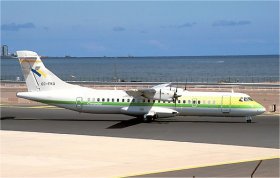
| The ATR-72 is a stretched development of the popular ATR-42 and was launched in January 1986. Significant differences between the ATR-72 and the smaller and older ATR-42 include a 4.50m (14ft 9in) fuselage stretch and reworked wings. The ATR-72's wings are new outboard of the engine nacelles and with 30% of it made up of composite materials, comprising composite spars and skin panels and a carbon fibre wing box. Aside from the baseline ATR-72-200, two developments have been offered, the ATR-72-210, and the ATR-72-500 (previously ATR-72-210A). The ATR-72-210 is optimised for operations in hot and high conditions. It has more powerful PW-127 engines for better takeoff performance. The ATR-72-500 (renamed from ATR-72-210A on May 18, 1998) further improved hot and high model was certificated in early 1997. It features PW-127Fs driving six blade composite Hamilton Sundstrand propellers. |
|
|
|
|
| Seating (normal) |
74 |
Max Takeoff (lbs) |
47,400 |
| Seating (maximum) |
- |
Certified Ceiling (ft) |
25,000 |
|
| Engines |
2 P&WC PW-124B |
To (Sealevel, ISA Temp) (ft) |
4,167 |
| Output lbs ea. Flat Rating |
2160 shp |
Landing Distance (ft) |
3,314 |
| Maximum Mach No. |
- |
Max Range (fuel) (nm) |
2,370 |
| High Speed Cruise (Kts) |
284 |
Max Range (payload) (nm) |
645 |
|
| Flight Time 300nm |
- |
Flight Time 1000nm |
- |
| Flight Time 600nm |
- |
|
|
|
| External |
|
Internal |
|
| Length (ft) |
89.10 |
Length (ft) |
63.00 |
| Height (ft) |
25.10 |
Height (ft) |
6.30 |
| Span (ft) |
88.80 |
Width: Max floor (ft) |
8.50 |
|
|
|
 |
|
 |
|
|
|